What European Game Designers Know About Your Brain That Vegas Never Told You
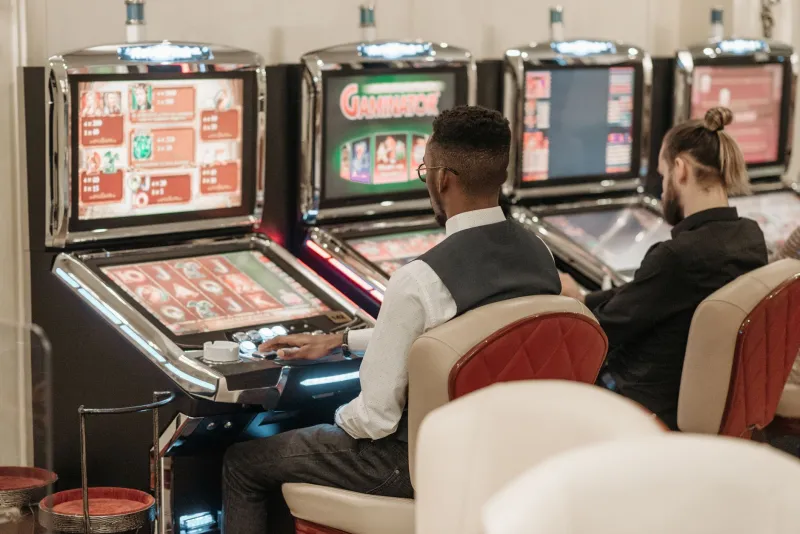
Pull up any classic Vegas-style slot, and within about thirty seconds you'll notice something. The lights are aggressive. The sounds are urgent. Every near-miss feels like the universe personally owes you a jackpot. That's not an accident—it's a multi-decade refinement of psychological pressure designed to keep you feeding coins into a machine.
Now open a Polish-developed slot on a European platform. Something feels... different. Calmer, maybe. More like you're playing a game rather than fighting one. American players who make the switch often struggle to articulate what changed. The games are still exciting. The wins still hit hard. But the low-grade anxiety that usually hums in the background? It's noticeably quieter.
So what's actually going on?
The Near-Miss Problem Is Bigger Than You Think
In behavioral psychology, a near-miss is when an outcome comes close to a reward without actually delivering one. Slot machines in traditional American casinos are famously engineered to produce near-misses at statistically improbable rates. Research published in journals covering gambling behavior has consistently shown that near-misses activate the same neural reward pathways as actual wins—even though the player walks away with nothing.
The result is a kind of manufactured craving. Your brain registers "almost," and your instinct is to try again immediately.
European game developers, operating under regulatory frameworks that are considerably more player-protective than most US state laws, have had to rethink this mechanic. Many Polish and broader EU-licensed games are built with near-miss frequency caps or are designed so that near-misses feel less emotionally loaded. It's a subtle distinction, but over a two-hour session, the cumulative effect on your stress levels is significant.
At Snatch Casino PL, the game library reflects this philosophy. When you're spinning through slots from European studios, you're interacting with products that had to pass muster with regulators who actually studied the psychological impact of game design—not just the math.
Color Psychology: Why European UIs Feel Less Like a Trap
Walk through a casino floor in Las Vegas and you're surrounded by red. Deep reds, bright reds, crimson accents everywhere. Color psychologists have documented for decades that red elevates heart rate, increases urgency, and subtly encourages faster decision-making. For a casino, faster decisions usually mean less deliberate ones.
Scroll through the interface of most Polish-operated platforms and you'll notice a very different palette. Blues, teals, deep purples, clean whites. These aren't arbitrary aesthetic choices. They're rooted in the same color psychology research, just applied with the opposite goal—creating an environment where players feel comfortable enough to stick around and explore, rather than anxious enough to act impulsively.
Snatch Casino PL's own visual identity leans into this. The design language prioritizes clarity and navigation ease over sensory bombardment. You can actually find the game you're looking for without wading through a deliberately confusing layout designed to disorient you into clicking on high-margin options.
Bonus Trigger Frequency: Slow Burn vs. Dopamine Spike
American slot design often front-loads excitement. Bonus rounds trigger frequently in early sessions—a technique sometimes called "seduction mode" in game design circles—before settling into longer dry spells. The goal is to hook players fast and then leverage the psychological principle of variable reward schedules to keep them chasing that initial high.
European studios, particularly those building for regulated markets, tend to design around a more consistent bonus trigger distribution. That doesn't mean bonuses are less exciting when they hit—it means the emotional architecture of the session is smoother. Players report feeling less like they're chasing something that was dangled in front of them and then yanked away.
This matters enormously for US players who are used to the spike-and-crash rhythm of domestic platforms. The adjustment period can feel almost anticlimactic at first. But give it a few sessions and most players report something they don't expect: they're actually having more fun, and they're making better decisions about when to stop.
The Sound Design Difference Nobody Talks About
Audio is the sleeper variable in casino game psychology. American slots are notorious for layering celebratory sounds even on small wins—sometimes wins that don't even cover the cost of the spin. The jingles, the coins, the triumphant musical stings all signal "you won" to your brain regardless of whether you're actually up or down.
European developers have been pushed—again, largely through regulatory pressure—to align audio feedback more honestly with actual outcomes. Big wins sound big. Small wins sound proportionally smaller. And losses are handled with restraint rather than disguised as something exciting.
For American players, this recalibration can be surprisingly clarifying. You start to develop a more accurate internal sense of how a session is actually going, which makes for smarter, more intentional play.
Responsible Gaming Features as Game Design, Not Just Compliance
Here's where European platform design really diverges from the US model. In most American casino contexts—online or physical—responsible gaming tools are bolted on as legal requirements. They exist in a menu somewhere, rarely surfaced, easy to ignore.
On Polish-licensed platforms operating under EU frameworks, responsible gaming features are woven into the actual user experience. Session time reminders appear naturally within the flow of play rather than buried in settings. Deposit limits are set during onboarding, not as an afterthought. Loss thresholds trigger genuine check-ins rather than perfunctory pop-ups.
This isn't just good ethics—it's actually good game design. Players who feel in control of their experience are players who trust the platform, return voluntarily, and engage more genuinely with the games. It's a longer-term business model that happens to align with treating players like adults.
What This Means for Your Next Session
If you're a US player exploring European platforms for the first time, understanding these design differences helps you calibrate your expectations. The experience isn't going to feel like a scaled-up slot parlor. It's going to feel more like a game—because that's what the designers actually intended.
You might find yourself playing a bit longer than usual without the familiar undercurrent of stress. You might notice that your session-end decisions feel less desperate and more deliberate. You might even—and this is the part that surprises most American players—enjoy yourself more consistently rather than in the manic peaks and frustrated valleys that domestic platforms tend to produce.
That's not luck. That's design. And now you know exactly what to look for.