Wired to Stop: How European Casino Games Are Built to Let You Walk Away
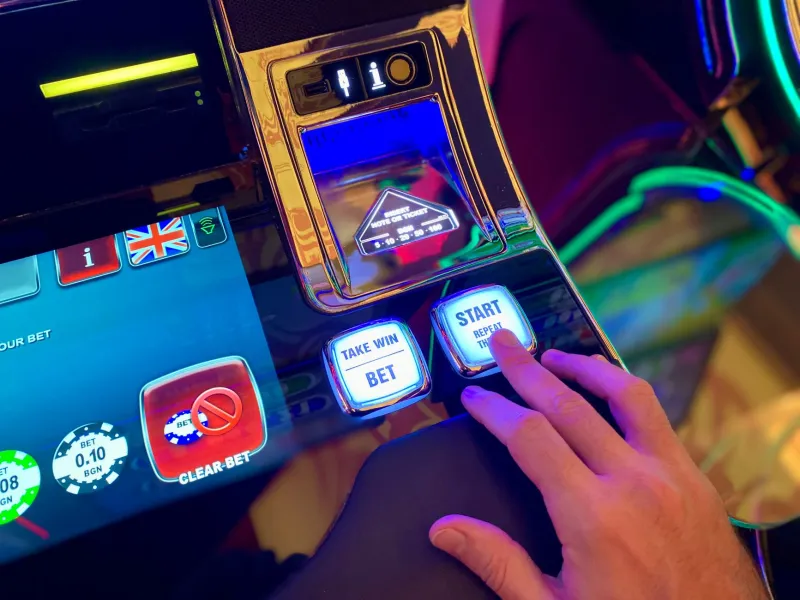
Anyone who has sat down at a Vegas slot machine knows the feeling. You blink, and somehow ninety minutes have vanished. Your drink is warm. Your legs are stiff. And yet something in your brain keeps whispering: just one more spin.
That whisper isn't an accident. It's architecture.
But spend time on a European platform — the kind of polished, regulation-forward experience you'll find at Snatch Casino PL — and something feels noticeably different. Sessions feel more contained. The urge to keep going is still there, but it doesn't have the same gravitational pull. Turns out, that difference is also intentional. It's just intentional in the opposite direction.
The American Model: Designing for the Trance
To understand what European developers are doing differently, it helps to understand what American casino design has historically optimized for.
Researchers who study gambling environments — people like Natasha Dow Schüll, whose book Addiction by Design became something of a bible in behavioral economics circles — have documented how land-based American casinos engineer what players themselves often call "the zone." It's a near-dissociative state where external reality fades and the machine becomes your entire world.
Digital American platforms inherited a lot of those same instincts. Fast spin cycles. Near-miss animations that trigger almost identical brain responses to actual wins. Bonus rounds that arrive just frequently enough to reset your internal clock. Loss disguised as wins — where you bet a dollar, win forty cents, and the machine plays a celebratory jingle anyway.
None of this is sinister in isolation. But layered together, these mechanics create what game designers call high arousal engagement — a state where rational decision-making takes a backseat to pure stimulus-response behavior.
What European Regulators Forced Designers to Rethink
Here's where the story gets interesting. European regulators, particularly bodies operating under frameworks like the UK Gambling Commission and various Polish and Maltese licensing authorities, started pushing back on some of these mechanics hard.
Mandatory session time displays. Forced reality checks every thirty or sixty minutes. Restrictions on certain near-miss configurations. Limits on how fast spin cycles can operate. These weren't just bureaucratic box-ticking — they fundamentally changed the design constraints that European developers had to work within.
And when you change constraints, you change creativity.
Developers building for the European market had to find ways to make games compelling without relying on trance-inducing mechanics. The result, over time, was a genuinely different design philosophy — one centered on what behavioral psychologists call episodic play rather than continuous play.
Episodic vs. Continuous: The Core Difference
Think about the difference between binge-watching a TV show and watching a movie. A well-designed TV episode has a clear beginning, middle, and end — plus just enough of a hook to make you want to watch the next one, not feel compelled to. A poorly designed streaming algorithm just autoplays the next episode before you've even processed what you just watched.
American casino mechanics often work like that autoplay button. European games, shaped by regulatory pressure and a different cultural relationship with gambling, tend to work more like well-crafted episodes.
Features tend to arrive in defined clusters rather than random, unpredictable bursts. Bonus rounds have clear completion states — a satisfying sense of done rather than an open loop that demands resolution. Base game volatility is often structured so that meaningful outcomes happen at intervals that feel paced rather than relentless.
Game designers working for studios that primarily serve European markets have talked openly about this shift in industry publications. The language they use is telling: words like "respectful," "transparent," and "player-centric" come up constantly. The goal isn't to eliminate excitement — it's to make excitement feel earned rather than manufactured.
The Role of RTP Transparency and Volatility Labeling
Another piece of this puzzle is information design. European platforms, including Snatch Casino PL, routinely display Return to Player percentages and volatility ratings right in the game interface. High volatility, low volatility, medium — players know what they're walking into.
This matters more psychologically than it might seem at first glance. When you know a game is high volatility going in, you calibrate your expectations. You understand that long dry stretches are part of the design, not a sign that a big win is "due." You make a conscious choice to engage with that risk profile.
American platforms, both land-based and digital, have historically resisted this kind of upfront transparency. The opacity isn't necessarily malicious — it's partly a product of regulatory environments that never demanded disclosure. But the effect is that players often engage with games without accurate mental models of what those games actually do.
Behavioral economists have a term for decisions made without accurate information: bounded rationality. When you remove information from the equation, you push players toward decisions that feel rational but are actually built on flawed assumptions. European transparency requirements, whatever their limitations, at least give players a fighting chance at building accurate expectations.
What This Means for How You Actually Play
If you're an American player coming to a platform like Snatch Casino PL for the first time, some things might feel subtly unfamiliar. The pace might feel slightly different. The rhythm of features and rewards might not match what you're used to from domestic platforms.
Give it a few sessions before you judge. What initially reads as "less exciting" often turns out to be something more valuable: more sustainable. Players who engage with European-style game design frequently report that they feel more in control of their sessions — that they make actual decisions about when to stop rather than surfacing from a daze and realizing they've been spinning for two hours.
That's not a small thing. One of the most underrated skills in casino gaming is session management — knowing when a session has run its course, when you're playing with a clear head versus chasing losses, when to pocket a solid win instead of feeding it back. European game design, almost as a side effect of its regulatory environment, tends to create natural decision points where those choices become easier to make.
The Bigger Picture
None of this is to say European casino games are perfect or that American-style games are purely manipulative. Design is always a spectrum, and good and bad actors exist on both sides of the Atlantic.
But the structural differences are real, and they matter. If you've ever felt like a casino game was playing you rather than the other way around, understanding the intentional psychology baked into those mechanics is genuinely empowering. And if you're looking for a platform where the design philosophy starts from a place of player respect rather than player capture, that's worth knowing too.
At Snatch Casino PL, the games in the library aren't chosen randomly. The emphasis on European-developed titles, transparent game information, and responsible play tools reflects a deliberate point of view: that the best casino experience is one where you're the one deciding when to walk away — not your dopamine receptors.